
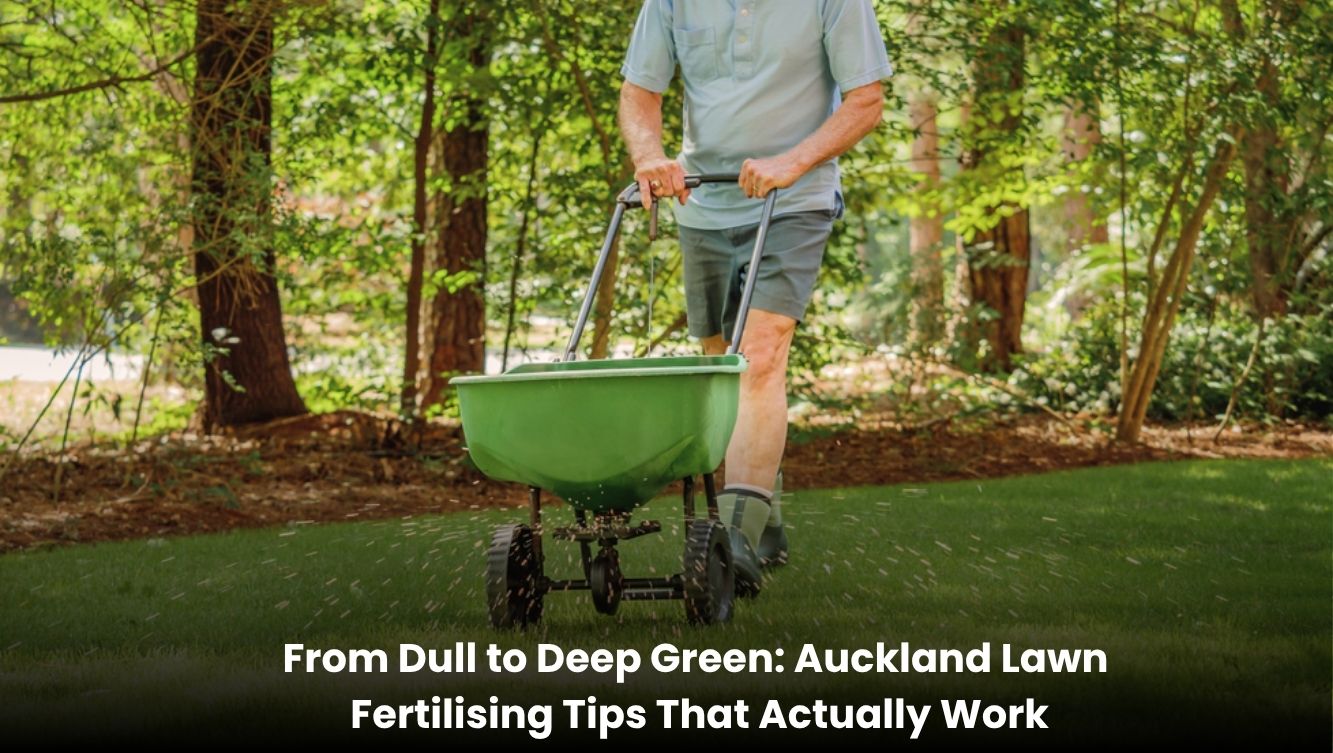
Auckland lawns have a particular challenge: the weather can change quickly. Warm days, regular rainfall, shade, foot traffic and fast spring growth can all affect how grass looks and performs.
One week, your lawn may look fresh and green. A few weeks later, it can become pale, thin, patchy or full of weeds.
The good news? A dull lawn does not always need to be replaced.
The right lawn fertilising routine can give grass the nutrients it needs to grow stronger, greener and more evenly. But fertilizer is not simply a matter of spreading more product across the lawn. Timing, soil condition, grass type, moisture and mowing habits all matter.
For Auckland homeowners, landlords, property managers and businesses, understanding these basics can make a noticeable difference.
This guide explains how lawn fertilising works, when to apply it, common mistakes to avoid and when professional lawn care can deliver better results.
Quick Answer: How Do You Make an Auckland Lawn Green Again?
A healthy green lawn needs the right balance of nutrients, water, sunlight and mowing. Start by checking the lawn’s condition, removing excessive thatch, mowing at the correct height and applying an appropriate fertilizer at the right time. Regular lawn care is more effective than heavy, occasional applications.
For lawns that remain thin or yellow despite proper care, professional assessment can help identify problems such as poor soil, drainage issues, compacted ground or nutrient deficiencies.
What Is Lawn Fertilising?
Lawn fertilising is the process of supplying grass with nutrients that support healthy roots, leaf growth and overall lawn strength.
The main nutrients commonly associated with lawn fertiliser are nitrogen, phosphorus and potassium. Each has a different role, and the right balance depends on the lawn, soil and time of year.
In simple terms: fertilizer gives grass some of the nutrients it needs to grow well, but it cannot fix every lawn problem.
A lawn that is yellow because of poor drainage will not necessarily become healthy simply because more fertilizer is added. The same applies to grass suffering from drought, heavy shade, pests or compacted soil.
This is why good lawn fertilising starts with understanding the condition of the lawn.
Why Lawn Fertilising Matters for Auckland Properties
Auckland’s climate can encourage strong grass growth, but it can also create conditions where lawns become stressed.
Rainfall can wash nutrients through the soil. Regular mowing removes some nutrients with grass clippings. High foot traffic can compact the soil, while shaded areas may struggle to receive enough sunlight.
Spring and autumn can be especially important periods for lawn care.
During active growth, grass needs access to suitable nutrients to maintain healthy colour and density. A well-fed lawn can also recover more effectively from mowing and everyday use.
A Healthy Lawn Is About More Than Colour
Deep green grass looks attractive, but colour alone should not be the goal.
A good lawn should also have:
- Strong, healthy roots
- Even growth
- Good coverage
- Better recovery from regular mowing
- Fewer bare areas
- Healthy soil conditions
- Enough moisture without staying waterlogged
This is where lawn fertilising becomes part of a wider lawn maintenance routine.
Lawn Fertilising Auckland: Timing Makes a Difference
One of the most common mistakes homeowners make is fertilising whenever the lawn looks slightly yellow.
That approach can lead to uneven growth or excessive feeding.
Instead, think about what the grass is doing.
Spring Lawn Care
Auckland lawns often respond strongly as temperatures rise and daylight increases.
Spring is a good time to assess the lawn after winter. Look for:
- Thin patches
- Moss
- Compacted soil
- Weeds
- Weak colour
- Excessive thatch
- Areas affected by shade or poor drainage
If the lawn is actively growing and needs additional nutrients, a suitable lawn fertiliser treatment can support stronger growth.
But avoid applying fertilizer simply because spring has arrived. The condition of the lawn should guide the decision.
Summer Lawn Care
Summer can put extra pressure on Auckland lawns.
Even when rainfall is available, hot or dry periods can stress grass. Fertilising heavily when the lawn is already struggling with heat or moisture shortages may not produce the result homeowners expect.
Water management becomes especially important.
Autumn Lawn Care
Autumn is another useful period to assess lawn health.
Grass may continue growing while temperatures become cooler. A suitable fertilising plan can help maintain lawn strength before winter conditions become more dominant.
Winter Lawn Care
Growth slows during colder periods.
Rather than forcing growth, focus on maintaining the lawn properly. Keep mowing when required, avoid cutting too short and monitor areas where water tends to sit.
Quick Answer: The best time to fertilise depends on grass growth, weather, soil condition and the type of fertiliser being used. In Auckland, seasonal lawn care is generally more effective than following one fixed date every year.
How Professional Lawn Care Auckland Services Approach Fertilising
Professional lawn care is not simply about arriving with a bag of fertiliser.
A good lawn care process starts with observation.
An experienced lawn care professional will consider:
- The current colour and density of the grass
- The condition of the soil
- Recent weather
- Mowing habits
- Sunlight and shade
- Drainage
- Foot traffic
- Existing weeds or moss
- The type of grass
- Previous fertilising treatments
This matters because two lawns in the same Auckland suburb can require completely different care.
A sunny lawn in Mount Roskill may behave differently from a shaded lawn in Devonport. A family lawn used every day may also need a different approach from a commercial property entrance.
Good lawn care is about responding to the lawn in front of you.
The Biggest Lawn Fertiliser Mistakes Homeowners Make
More fertilizer does not mean a better lawn.
In fact, overfeeding can cause problems.
1. Applying Too Much Fertiliser
Too much fertiliser can stress grass and may cause uneven or excessive growth.
Always follow the product instructions and avoid guessing the application rate.
2. Fertilising Dry, Stressed Grass
If grass is already struggling because of heat or lack of moisture, adding fertiliser without addressing the underlying issue may do little to help.
3. Ignoring the Soil
Grass grows in soil.
If the soil is compacted, poorly drained or lacking suitable growing conditions, fertiliser alone will not solve the problem.
4. Mowing Too Short
Very short mowing can place unnecessary stress on grass.
A slightly higher mowing height often helps the lawn retain moisture and maintain stronger growth.
5. Feeding Without a Plan
Applying different products whenever the lawn looks dull can create an inconsistent maintenance routine.
A simple seasonal plan is usually easier to manage.
6. Forgetting Water
Nutrients need moisture to become available to plants.
Fertilising and then allowing the lawn to become severely dry can limit the results.
A Simple Lawn Fertilising Routine That Works
If you want a healthier lawn, start with the basics.
Step 1: Inspect the Lawn
Walk across the property and look for colour changes, bare patches, moss, weeds and areas where water collects.
Do not treat every section of the lawn as if it has the same problem.
Step 2: Check Mowing Practices
Keep blades sharp and avoid removing too much grass at once.
If the lawn has become very long, reduce its height gradually rather than cutting it extremely short in one session.
Step 3: Look at Soil Conditions
Hard, compacted soil can make it difficult for water, air and roots to move through the ground.
If the soil is compacted, aeration may be more useful than simply adding more fertiliser.
Step 4: Choose the Right Fertiliser
Different lawns have different needs.
The product selected should suit the grass, season and condition of the lawn.
Step 5: Apply Carefully
Follow the manufacturer’s instructions.
Uneven spreading can create visible differences in colour and growth, while excessive application can damage grass.
Step 6: Maintain the Lawn Afterwards
Fertilising should not be treated as a one-off fix.
Continue with sensible mowing, watering and weed management.
In simple terms: feed the lawn when it needs feeding, but make sure the basic growing conditions are also right.
What If Fertilizer Is Not Fixing a Yellow Lawn?
This is an important question.
If your lawn remains yellow after fertilising, there may be another cause.
Possible reasons include:
- Poor drainage
- Compacted soil
- Insufficient sunlight
- Water stress
- Excessive thatch
- Pest activity
- Disease
- Incorrect mowing
- Nutrient imbalance
- Seasonal dormancy
This is one reason professional lawn fertilising services can be useful.
Rather than repeatedly applying products, an experienced lawn care provider can look at the whole lawn and determine what is actually holding it back.
Why Lawn Mowing and Fertilising Should Work Together
Fertilising cannot be separated completely from mowing.
Regular mowing encourages a maintained appearance, but cutting incorrectly can weaken the lawn.
For example, repeatedly cutting grass extremely short can leave it more exposed to heat and moisture loss. Removing too much leaf growth at once can also put additional stress on the plant.
A better approach is to keep mowing consistent and avoid drastic cuts.
This is where combined lawn care services Auckland homeowners use can make maintenance easier.
Instead of treating mowing, fertilising and general lawn care as separate jobs, they become part of one routine.
Lawn Fertilisation Services for Homes and Businesses
A residential lawn may be used by children, pets and family members throughout the week.
Commercial lawns face different pressures.
Office grounds, rental properties, retail spaces and other business properties need to look tidy and cared for while handling regular foot traffic.
Professional lawn fertilisation services can help property owners maintain a consistent lawn care schedule rather than waiting until the grass looks noticeably unhealthy.
The same principle applies to rental properties.
A lawn that is regularly maintained is easier to keep under control than one that has been neglected for months.
Garden Experts: Professional Lawn Care for Auckland Properties
Garden Experts provides professional lawn care and gardening services for Auckland homeowners, property owners and businesses.
The focus is not simply on making grass look green for a short period. Good lawn care means looking at mowing, fertilising, garden maintenance and the condition of the property as a whole.
Garden Experts can help with professional lawn mowing, lawn care and wider garden maintenance, giving property owners a practical way to keep outdoor areas neat and healthy.
For homeowners who are unsure why their lawn keeps becoming thin or dull, professional help can also save time and prevent repeated trial-and-error treatments.
The right service is not about doing more to the lawn.
It is about doing the right work at the right time.
How to Get Better Results From Lawn Fertilizer Treatment
Want your lawn to stay greener for longer?
Keep these practical points in mind:
- Do not fertilise simply because the grass looks dull.
- Check soil and drainage before increasing fertilizer.
- Follow application instructions carefully.
- Avoid mowing too short.
- Keep mowing equipment maintained.
- Watch shaded areas closely.
- Give the lawn suitable moisture after treatment when required.
- Monitor changes rather than expecting instant results.
- Keep a seasonal maintenance routine.
- Ask a professional when recurring problems remain unexplained.
A good lawn usually improves through consistent care rather than one dramatic treatment.
A Real-World Example: Why One Lawn Can Need a Different Approach
Imagine two Auckland properties.
The first has a sunny front lawn with good drainage. The grass is growing but has become slightly pale after a period of regular mowing.
The second has a shaded backyard where water tends to remain after rain. The grass is thin and patchy.
Both owners might describe their lawns as “not green enough.”
But they do not have the same problem.
The first lawn may benefit from appropriate fertilising and ongoing mowing.
The second may need attention to drainage, shade, soil condition and possibly moss before fertilising becomes the main focus.
This is why experienced lawn care is about diagnosis as much as treatment.
Can You Fertilise Your Lawn Yourself?
Yes. Many homeowners can manage basic lawn fertilising themselves.
The important part is knowing the limitations.
DIY fertilising works best when:
- The lawn is generally healthy
- The problem is clearly understood
- The correct product is selected
- Application instructions are followed
- Mowing and watering are already under control
Professional help becomes more useful when the lawn has recurring problems, large areas, uneven growth or unexplained changes in colour.
For larger Auckland properties, businesses and homeowners who simply do not have time for regular maintenance, professional lawn care can also make the process much easier.
The Bigger Picture: Healthy Lawns Need Consistent Care
A lawn is a living part of the garden.
It responds to weather, mowing, soil, sunlight, moisture, foot traffic and seasonal changes.
That is why the best lawn fertilising approach is not based on one product or one application.
Think of it as a routine:
Inspect → mow correctly → check soil → fertilise when appropriate → water sensibly → monitor → maintain.
That simple cycle can prevent many common lawn problems.
It also makes it easier to spot issues before they become expensive or difficult to manage.
What Auckland Homeowners Should Watch For
If your lawn is losing colour, do not immediately assume it needs more fertiliser.
Ask:
Is it getting enough sunlight?
Grass growing under trees or beside buildings may naturally struggle.
Is water draining properly?
Constantly wet soil can create problems just as easily as dry soil.
Am I mowing too short?
Short mowing can place unnecessary stress on grass.
Has the lawn been heavily used?
Regular walking, children playing, pets and vehicles can compact soil and damage grass.
Has the lawn been maintained regularly?
Long gaps between mowing and fertilising can make recovery more difficult.
These questions often reveal more than simply looking at lawn colour.
Quick Summary: The Secrets to a Greener Auckland Lawn
For better lawn results:
- Feed the lawn based on its needs, not guesswork.
- Choose fertilizer suited to the grass and season.
- Do not overapply.
- Keep mowing consistent.
- Avoid cutting grass excessively short.
- Check drainage and soil condition.
- Pay attention to shaded areas.
- Water appropriately.
- Watch for weeds, moss and pests.
- Use professional lawn care when problems continue.
A healthy lawn is rarely the result of one treatment. It is the result of small, sensible jobs being done consistently.
Final Thoughts
A deep green lawn does not happen by accident.
Fertiliser can play an important role, but the strongest results come from understanding the lawn as a whole. Mowing, soil condition, sunlight, water, drainage and seasonal growth all influence how grass performs.
For Auckland properties, a consistent lawn care routine is usually far more effective than reacting whenever the lawn starts looking dull.
If your lawn is struggling despite regular mowing and basic maintenance, professional help may be the next sensible step. Garden Experts can support homeowners and businesses with professional lawn care, lawn mowing and garden maintenance services designed around the needs of Auckland properties.
The goal is simple: healthier grass, a better-looking outdoor space and less guesswork for the property owner.
Frequently Asked Questions
1 How often should I fertilise my lawn in Auckland?
There is no single schedule that suits every Auckland lawn. Fertilising frequency depends on grass type, soil, weather, lawn condition and the product used. A seasonal lawn assessment is a better starting point than applying fertilizer on a fixed schedule.
2 What is the best lawn fertiliser treatment for a yellow lawn?
The best treatment depends on why the lawn is yellow. Nutrient deficiency is one possibility, but poor drainage, shade, drought, pests or mowing problems can also cause yellowing. Identifying the cause first helps prevent unnecessary fertilization.
3 When is the best time for lawn fertilising Auckland homeowners can do?
The best time depends on active grass growth and weather conditions. Spring and autumn can be important lawn care periods in Auckland, but fertiliser should be applied according to the lawn’s condition and the product’s instructions.
4 Can professional lawn fertilising services fix a patchy lawn?
Professional lawn fertilising services can help when poor nutrition is contributing to weak growth. However, patchy grass can also result from shade, soil compaction, drainage, pests or heavy use. A professional assessment can help identify the main cause.
5 Should I mow before or after fertilising?
In many situations, mowing before fertilising can make application easier, provided the lawn is not cut too short. The exact timing can depend on the fertilizer product and lawn condition. Always follow the product instructions.
6 Where can I find professional lawn care services in Auckland?
Garden Experts provides professional lawn mowing, lawn care and garden maintenance services for Auckland properties. Professional support can be particularly useful when lawn problems keep returning or when regular property maintenance is difficult to manage.